Friday, February 11, 2011
Canada regains favour among Egypt's wheat buyers
 Canada, which has got into difficulty meeting Japanese wheat import term, has regained favour with the world's top buyer, winning its first shipments to Egypt through tender in four months.
Egypt's main state-run grain buyer, the General Authority for Supply Commodities (Gasc), said after its second wheat tender in less than a week that it was to take 170,000 tonnes of the cereal, with origin split between Australia, Canada and the US.
The awards to Australia and the US followed the recent pattern, since dwindling stocks accelerated price rises in wheat from France - Egypt's default grain trade partner thanks to its position at the other end of the Mediterranean.
However, Canadian wheat has not won at an Egyptian tender since October.
Indeed, Canada triggered doubts over its ability to compete on quality last month when it failed to fill a tender from Japan, its fourth-largest customer, because of concerns over whether wheat protein levels would reach the circa-13.5% required.
East vs west
Canada's ability to meet the cut with Gasc, which also enforces stringent protein requirements, appeared to reflect the Jekyll and Hyde nature of the country's harvest last year, Macquarie analyst Alex Bos said.
The grain which missed out on Japan was spring-sown wheat from the west of Canada, the home to the main agricultural states such as Saskatchewan, where both the quality and the quantity of last year's crop were damaged by heavy rains.
However, Egypt had purchased soft red winter wheat from the east of the country, which had missed out on weather damage.
"They had a greater winter wheat crop in Ontario," Mr Bos said.
"They have the supply just when the world is calling out for wheat," he said.
Priced out
The winning Canadian wheat was offered, by Nidera, at $358.50 a tonne, excluding shipping costs of $27-28 a tonne.
The cheapest French wheat was tendered by Louis Dreyfus at $378.74 a tonne, without freight costs.
Gasc has not bought French wheat at tender since early December, when it paid Glencore $324.50 a tonne, excluding shipping.
Japan a week ago resumed purchases of west Canadian wheat, with the Canadian Wheat Board offering 37,000 tonnes with a guaranteed minimum protein level of 13.3%.
(Source: http://www.agrimoney.com/news/canada-regains-favour-among-egypts-wheat-buyers---2814.html)
Wheat and corn futures rise on the CBOT; beef and pork prices mixed
 CHICAGO (AP) - Grains futures traded mixed Friday on the Chicago Board of Trade.
Wheat for March delivery gained 4.25 cents at $8.67 a bushel; March corn added 8 cents at $7.0650 a bushel; March oats fell 1 cent at $4.18 a bushel; while soybeans for March delivery fell 17 cents at $14.16 a bushel.
Beef and pork traded mixed on the Chicago Mercantile Exchange.
April live cattle fell 0.37 cent to $1.1270 a pound; March feeder cattle was up 1.20 cent at $1.2602 a pound; April lean hogs fell 1.33 cent at 92.37 cents a pound; while February pork bellies were unchanged at $1.1700 a pound.
(Source: http://www.canadianbusiness.com/markets/market_news/article.jsp?content=D9LAQNE00)
Govt lifts export ban on non-basmati rice
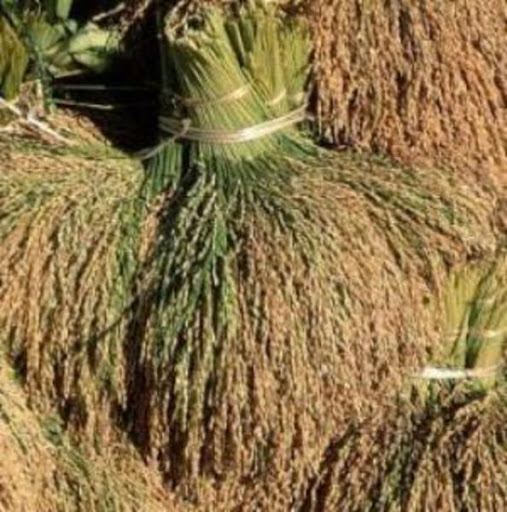 The government today allowed the export of three varieties of non-basmati rice grown in the southern states in anticipation of bumper crop production this year.
Partially lifting a three-year old ban, the government has permitted exports of 'Ponni Samba' and 'Matta' varieties of basmati, subject to a cap of 25,000 tonnes each, while shipments of 'Sona Masuri' have been permitted with a cap of 1,00,000 tonnes, the Directorate General of Foreign Trade (DGFT) said in a notification.
"Certain varieties of rice (Sona Masuri, Ponni Samba and Matta) are permitted to be exported with a limit on quantity of export for the KMS (Kharif Marketing Season), 2010-11," the DGFT said, adding that the export ban continues on other varieties.
Exemptions from the export ban would also be contingent upon the value of shipments exceeding $850 per tonne.
These varieties are grown in Tamil Nadu, Kerala, Andhra Pradesh and Karnataka.
According to the Agriculture Ministry, rice production will rise to 94 million tonnes in the 2010-11 crop year from 89 million tonnes in the previous year.
The DGFT, an arm of the Commerce Ministry responsible for export and import-related matters, said that overseas shipment of two varieties of onions has also been permitted, subject to a licence.
"The export of Bangalore Rose onions and Krishnapuram onions is now restricted and their export shall be permitted under licence," it said, adding that the ban on exports of other varieties of onions will continue.
The government had banned the export of onions early this January to rein in soaring onion prices, which touched Rs 70-85 per kg on December 21, 2010, in retail markets of major metros.
The decisions were taken on Wednesday by an Empowered Group of Ministers headed by Finance Minister Pranab Mukherjee.
(Source: http://www.business-standard.com/india/news/govt-lifts-export-bannon-basmati-rice/125434/on)
Wheat tumbles on production estimates
 Wheat futures traded slightly positive on Thursday in a very narrow range. The movement was restricted by the revised production estimates and the sluggish spot market activities. This kept the prices away from any steep losses or gains.
U.S. wheat futures declined towards the yesterdays closing due to the strong dollar and the liquidation f the positions. There are no fundamentals which is supporting the fall.
The fundamentals are strengthened due to demand potential from North Africa and Middle East countries. UN reports of the potential crisis in china due to drought in the wheat growing areas supported the CBOT wheat futures to rally.
The increase in the prices and volume while the open interest is decreasing indicates that the prices be subjected to correction which might be good buy point for the uptrend. The basis of the wheat prices is recovering which is expected to continue for the day.
Outlook
The wheat futures are anticipated to open positive and resume the down trend as the prices don’t find any support from the spot markets. Currently the CBOT prices are trading negative by 0.4%.
Fundamentals
The demand and the arrivals across the spot markets are not much prominent. The acreage under wheat has in-creased by 9 lakh ha in the current rabi season. According to second advance estimates the production of wheat is estimated at 81.47 million tons compared to 80.80 million tons last year.
Wheat drops on ample supply
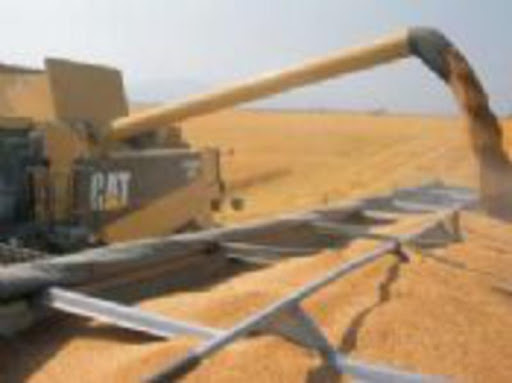 Wheat yesterday traded with the negative node and settled -0.06% down at 1306 on reduced offtake against adequate stocks.
We are likely to achieve record production of wheat (81.47 MT), pulses (16.51MT) and cotton (33.9 million bales of 170 kg each) this year," agriculture minister Sharad Pawar told. In Delhi wheat prices gained 4.4 rupee to end at 1330 rupees per 10 kg.
In yesterday's trading session Wheat has touched the low of 1301.8 after opening at 1306.6, and finally settled at 1306.
For today's session market is looking to take support at 1301, a break below could see a test of 1296 and where as resistance is now likely to be seen at 1311.8, a move above could see prices testing 1317.6.
Trading Ideas:
Wheat trading range is 1295.9-1317.5.
Wheat settled down on reduced offtake against adequate stocks. We
Wheat is having resistance at 1312 and support at 1301 level.
The total sowing acreage of wheat reported at 291.80 lakh hectares on 04th, February 2011.
In Delhi wheat prices gained4.4 rupee to end at 1330 rupees per 10 kg.
(Source: http://www.commodityonline.com/futures-trading/tradingtips/Wheat-drops-on-ample-supply-11645.html)
Vietnam to stockpile 1 million tons of rice
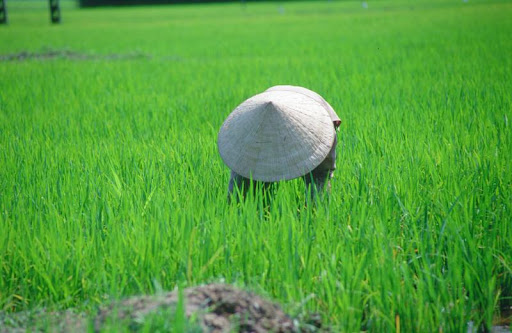 Hanoi - Vietnam, the world's second-largest rice exporter, plans to stockpile 1 million tons of rice to help sustain the market for farmers amid low prices, authorities said Friday.
Truong Thanh Phong, chairman of Vietnam Food Association said the plan was agreed between the association and its 60 members Thursday.
Exporters have not been eager to buy rice from farmers because they have signed few contracts with importers, so the price of rice has been low as farmers in the Mekong Delta begin harvesting.
Under the association's plan, exporters would begin buying and the price would increase.
Those companies are to offer prices that would allow farmers to make a profit of at least 30 per cent, Phong said.
Vietnam's biggest rice importer, the Philippines, has not signed any contracts with Vietnam this year. However, the country, which has imported 1.5 million to 2 million tons of Vietnamese rice in recent years, was expected to again buy at least 1.5 million tons this year, the association said.
Instead of focusing its exports on the Philippines, Vietnam has signed contracts with Indonesia and Bangladesh, which allowed Vietnam to export 485,000 tons of rice in January, up 36 per cent from the same month last year, the association said.
Phong reassured companies that the price of rice this year would be higher than last year so companies should be confident to stockpile the crop.
In 2010, Vietnam exported 6.75 million tons of rice for 3.23 billion dollars, second only to Thailand.
The Vietnamese government plans to export 6 million tons of rice this year, a little bit lower than last year because stockpiles are lower than last year.
(Source: http://www.earthtimes.org/articles/news/366817,stockpile-million-tons-rice.html)
Govt lifts export ban on non-basmati rice
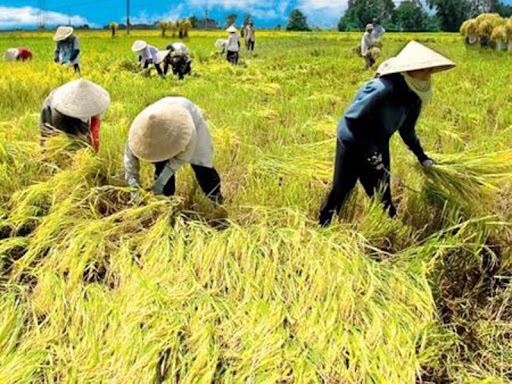 The government today allowed the export of three varieties of non-basmati rice grown in the southern states in anticipation of bumper crop production this year.
Partially lifting a three-year old ban, the government has permitted exports of 'Ponni Samba' and 'Matta' varieties of basmati, subject to a cap of 25,000 tonnes each, while shipments of 'Sona Masuri' have been permitted with a cap of 1,00,000 tonnes, the Directorate General of Foreign Trade (DGFT) said in a notification.
"Certain varieties of rice (Sona Masuri, Ponni Samba and Matta) are permitted to be exported with a limit on quantity of export for the KMS (Kharif Marketing Season), 2010-11," the DGFT said, adding that the export ban continues on other varieties.
Exemptions from the export ban would also be contingent upon the value of shipments exceeding $850 per tonne.
These varieties are grown in Tamil Nadu, Kerala, Andhra Pradesh and Karnataka.
According to the Agriculture Ministry, rice production will rise to 94 million tonnes in the 2010-11 crop year from 89 million tonnes in the previous year.
The DGFT, an arm of the Commerce Ministry responsible for export and import-related matters, said that overseas shipment of two varieties of onions has also been permitted, subject to a licence.
"The export of Bangalore Rose onions and Krishnapuram onions is now restricted and their export shall be permitted under licence," it said, adding that the ban on exports of other varieties of onions will continue.
The government had banned the export of onions early this January to rein in soaring onion prices, which touched Rs 70-85 per kg on December 21, 2010, in retail markets of major metros.
The decisions were taken on Wednesday by an Empowered Group of Ministers headed by Finance Minister Pranab Mukherjee.
Vietnam to increase rice exports
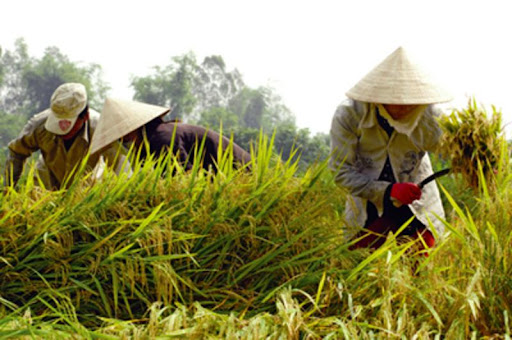 Vietnam plans to increase its rice exports this year in a move to assist farmers.
Truong Thanh Phong, chairman of the Vietnam Food Association (VFA), told yesterday meeting that besides exporting to Indonesia and Bangladesh, VFA would try to secure orders from Cuba, Iraq, Malaysia and the Philippines.
Mr. Phong stated that Vietnamese rice has an advantage over Thai and Pakistani rice as it is cheaper.
Philippine is expected to import 1.5 million tons of rice this year and Indonesia too will be importing a large volume by mid-year. Vietnam must therefore gear itself to avail of this export market at the appropriate time.
VFA is hence preparing to assign its members of 65 companies to purchase one million tons of rice at the market price, but no less than VND5, 000 per kilogram, for storage from early March to mid April.
These enterprises will be given preferential loans at low interest rates to buy rice stocks.
Le Minh Truong, director of Song Hau Food Company, said that VFA must clearly instruct and monitor companies to buy rice from farmers at reasonable rates otherwise they will buy and export at very low rates causing a stiff competition amongst local exporters.
According to VFA, Vietnam exported over 485,000 tons of rice by January 31, 350,000-400,000 tons more than their set target. The average export rate was US$503.46 per ton (FOB price), showing a US$39.54 hike per ton.
The country plans to export a further 700,000 tons in February and 500,000-600,000 tons in March. In total, the rice exports will touch around 1.8 million tons in the first quarter.
Local rice firms have registered to export 1.515 million tons of rice to Indonesia and Bangladesh, of which 4.484 million tons has already been sent and the remaining 1.031 million tons will be delivered this month.
(Source: http://www.saigon-gpdaily.com.vn/Business/2011/2/89582/)
Thursday, February 10, 2011
Wheat May Witness Selling Pressure
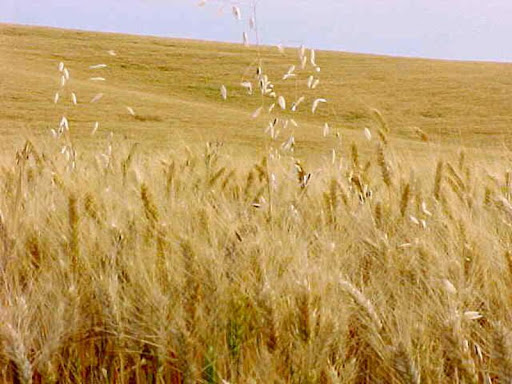 U.S. wheat futures stumbled on a strong dollar and profit taking after Wednesday's gains. The Wednesday rally was due more to corn's strength rather than a fundamental change in the outlook for wheat. While supplies for grains generally are tight, analysts add that wheat appears to have the least upside.
KCBT wheat ended down 20 cents to $9.68 and MGEX wheat settled down 12 1/4 cents to $10.14 3/4.March CBOT wheat closed down 23 1/4 cents, or 2.6%, to $8.62 3/4 per bushel and the contract is currently trading higher at $8.67, up 42 points.
Indian wheat futures for the March contract ended the last session down by 0.08% at Rs 1305.8 per 100 kg and the open interest added 6.54%.
March contract on NCDEX is likely to move lower with support at Rs 1,300 and resistance at Rs 1,310.
(Source: http://www.indiainfoline.com/Markets/News/Wheat-May-Witness-Selling-Pressure/3546926383)
Wheat’s Rally to Fuel Gains in Rice, Zeigler Predicts
 Rice, the staple food for half the world, may advance following a rally in wheat prices as consumers seek alternatives, according to Robert Zeigler, director general of the International Rice Research Institute.
“If wheat production falls, people will have to substitute with something in their diet: rice is the easiest one,” Zeigler said in an interview on Bloomberg Television today. There are no signs of panic buying at this stage, Zeigler said.
Wheat climbed to the highest level in more than two years this week on concern drought inChina may curb output, boosting competition for dwindling global supplies. The jump may fuel further gains in global food costs, which reached a record last month. The world’s neediest people are most affected by rising food costs, World Bank President Robert Zoellick said yesterday.
Wheat on the Chicago Board of Trade, the global benchmark, touched $8.9325 a bushel on Feb. 9, the highest level since Aug. 25, 2008. The grain has surged 71 percent over the past year afterRussia banned exports and floods hurt crops in Canada and Australia. Rough-rice futures, trading today at $16.07 per 100 pounds in Chicago, have gained 12 percent in the past year.
China, the top wheat consumer, is having a prolonged drought in its main growing region, according to Minister of Agriculture Han Changfu. The nation will spend 12.9 billion yuan ($1.96 billion) to bolster grain production and fight the drought, Premier Wen Jiabao has said.
The International Rice Research Institute, or IRRI, is a research center in the Philippines that develops crop varieties and farm techniques to help growers to improve yields and quality, according to its website. Zeigler has more than three decades experience in agricultural research.
Wheat Falls on Speculation Price Surge May Slow Import Demand
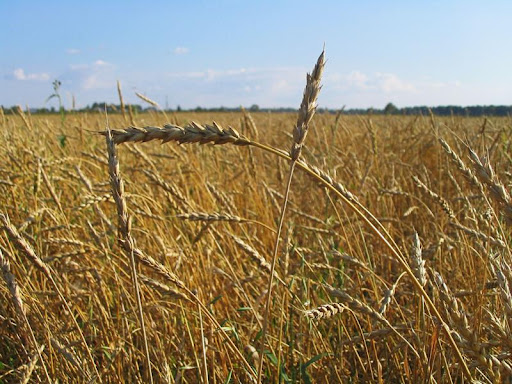 Wheat futures plunged the most since November on speculation that the highest prices in 29 months will slow demand and encourage farmers to plant more.
U.S. exporters sold 507,310 metric tons in the week ended Feb. 3, down 10 percent from a week earlier, the U.S. Department of Agriculture said today. U.S. spring-wheat planting begins in April, and the area sown with winter wheat for this year’s crop is 9.8 percent bigger than last year, the USDA said last month. Wheat futures are up 69 percent in the past year.
“High prices beget low prices,” said Dan Kuechenmeister, the manager of the commodities department at RBC Dain Rauscher in Minneapolis. “All the agriculture markets are providing great incentive to try to produce a big crop.”
Wheat futures for March delivery fell 23.25 cents, or 2.6 percent, to settle at $8.6275 a bushel at 1:15 p.m. on the Chicago Board of Trade, the biggest drop since Nov. 16.
Yesterday, the price touched $8.9325, the highest for a most-active contract since Aug. 25, 2008, after the USDA cut its outlook for global grain supplies. Drought last year slashed output inRussia, floods eroded crops in Canada and Australia, and dry weather in the U.S. threatened winter crops.
Wheat was the fourth most-valuable U.S. crop in 2009 at $10.6 billion, behind corn, soybeans and hay, government data show.
Rice exporters demand export lift from north varieties of rice
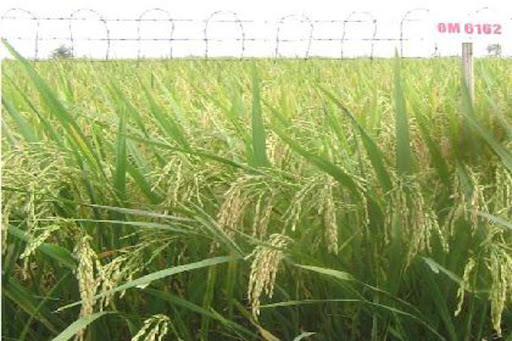 New Delhi, Feb 10 (PTI) Rice exporters today demanded that the government allow exports of premium varieties of non-basmati rice grown in north such as ''Sugandha'' and ''Sharbati'' on the lines of the decision taken with regard to South Indian varieties yesterday.
"The decision taken by the government seems to be an incomplete decision and this will benefit states like Tamil Nadu, Kerala, Andhra Pradesh and Karnataka," All India Rice Exporters Association President Vijay Setia said reacting to government''s decision to lift ban on three rice varieties.
"Instead of commercial or economic decision, it looks like a political decision keeping an eye on elections in the southern states," Setia added.
He, however, noted that this would definitely help farmers of South India, who were getting less price for their premium rice.
Buoyed by prospects of higher rice production this year, the government yesterday decided to lift the three-year old ban on exports by allowing shipment of three varieties of the non-basmati grain grown in the four southern states.
A lack of rain in China threatens to send wheat prices even higher
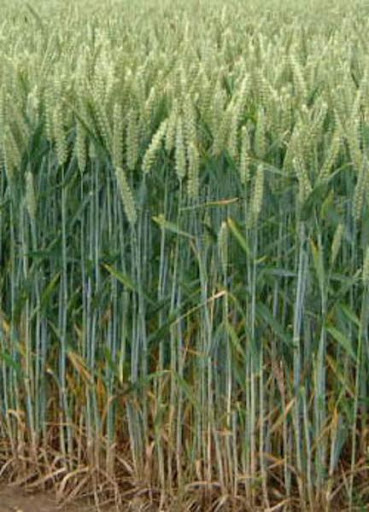 FEW commodities are impervious to the “China effect”—the upward pressure on prices from rampant demand in the world’s bounciest big economy. Coffee is one: few Chinese drink the stuff. Wheat has been another. China is the world’s biggest producer, remaining largely self-sufficient by growing some 18% of the global harvest. Higher prices have been caused by growing appetites and supply disruptions elsewhere.
Things could be about to change. On February 8th the UN Food and Agriculture Organisation (FAO) warned that a drought in China’s wheat belt could devastate harvests in June. So the country may buy large amounts on global markets. This could be a “game changer” for wheat, says Sudakshina Unnikrishnan of Barclays Capital.
The FAO reported that rain and snowfalls were well below average in eight wheat-growing regions. The local weather bureau claims, a bit implausibly, that if there are no showers soon in Shandong province the drought will be the worst for 200 years. The parching threatens a quarter of the country’s crop.
The worst may not happen. As Kisan Gunjal of the FAO points out, the heavens may yet open in the coming months. China’s government has pledged to divert water to the stricken areas and provide cash for wells. “Weather modification” teams, which apparently helped to keep the Beijing Olympics rain-free, are turning their hand to seeding clouds with chemical-filled artillery shells to encourage downpours.
China has also built up sizeable wheat stocks—60m tonnes, according to America’s Department of Agriculture—since the 2008 food crisis. But it is likely to want to keep these buffers high, particularly after a series of recent disruptions to supply. Drought in Russia, a big supplier, led to an export ban last year. Floods in Australia—linked to the broader La Niña phenomenon, an occasional wobble in the climate which may also be playing a role in China’s drought—have hit the quality of wheat for export.
The International Grains Council estimates world wheat production in 2011 will be 647m tonnes, much lower than in the two years before. If China starts buying, importers may step up efforts to secure wheat and exporters may impose more bans. Dark clouds are gathering, but not the right sort.
(Source: http://www.economist.com/node/18118817?story_id=18118817&fsrc=rss)
EU wheat pauses after USDA rally, more gains seen
* European milling wheat futures retreat slightly in midday
deals on Thursday, handing back some gains from the previous
session after a bullish U.S. Department of Agriculture report.
 * Dollar's strength against the euro weighed on Chicago
overnight, but traders said fundamentals remained supportive,
dealers said. [GRA/]
 * "We are still digesting yesterday's USDA report," a trader
in Paris said. "Buyers are waiting on the sidelines"
 * The USDA slashed forecasts on Wednesday for global wheat
ending stocks and U.S. corn stockpiles, which reinforced supply
worries. [ID:nN09204933]
 * "The market is consolidating," another trader said. "The
trend remains bullish. What we need to look at is where we'll
stand at the end of the day, when Chicago opens."
 * Paris March milling wheat BL2H1, Europe's benchmark, was
down 0.54 percent or 1.5 euros to 277.00 euros ($379) a tonne by
1221 GMT. The contract reached a new high of 281 euros on
Wednesday.
 * Paris' November contract BL2X1 was likewise down 2.25
euros, or 0.92 percent, at 243.50 euros a tonne.
 * Traders said French milling wheat was still competitive
with U.S. hard red winter wheat, a quality that is still in
demand from north African and Middle Eastern importers.
 * But others noted that premiums in ports on the cash market
were going down, suggesting diminishing needs from exporters.
 * Customs data showed France exported 1.4 million tonnes of
soft wheat in December, raising total exports in the first half
of the 2010/11 season by 32 percent year-on-year to 10.1 million
tonnes. [ID:nLDE71910J]
 * Euronext rapeseed futures <0#COM:> in Paris also in the
red, with the May contract COMK1 off 0.05 percent at 476.50
euros a tonne.
SPAIN
 * Spanish wheat prices pause after months-long rally due to
weak demand from indebted livestock farmers in the major
grain-importing country.
 * Traders say demand in seasonal lull due to reproductive
cycle, but also due to a drop in meat exports.
 * Prompt feed wheat in top grains port Tarragona offered at
251 euros/tonne, down 1 euro from a week ago GRAES01.
 * Resales reported for feed wheat at 245 euros in Tarragona,
replacement quoted at 260 euros.
 * "Everything is below replacement, stocks are falling.
Sooner or later they'll have to replace, and prices can only go
up," a trader said.
 * "I would say prices are high enough, but the market is
heartless. At this rate there'll be just a handful of livestock
farmers left in Spain, and we'll import meat."
 * Traders said stocks of domestic old crop wheat were also
drying up, which would make Spain more dependent on imports in
the coming months and could add further upside to prices.
GERMANY
 * Germany's market was weaker, following the drop in Paris
but with prices still well supported by expectations of
increasingly tight global grain supplies as described by the
USDA report on Wednesday.
 * Standard bread-quality wheat for February delivery in
Hamburg was offered for sale down one euro at 274 euros a tonne,
with buyers at around 272 euros.
 * "We have another USDA report on Wednesday this time about
export sales which could also cause some fireworks," one trader
said. [ID:nN17540A] "The market seemed to be taking a pause
today but it is remaining well supported around recent highs."
 * Market talk was also growing that major importer Algeria
was about to make a purchase after negotiating for much of the
week in a tender for a nominal 50,000 tonnes of wheat.
[ID:nLDE71614C]
 * Bids were submitted in Germany to buy 163,944 tonnes of
barley in the latest round of sales from European Union
intervention stocks. Some 196,936 tonnes of intervention barley
is still unsold in Germany. [ID:nLDE7190MP]
 * "This bidding level shows hefty demand for intervention
feed barley," one trader said. "There is market talk that a
sizeable volume of the EU sales made in Germany has been sent
elsewhere in the EU, including big shipments to Spain."
 * The roster in Spain's second-largest grains port Cartagena
shows a cargo of 29,000 tonnes of barley shipped from Rotterdam,
as feed makers seek cheaper alternatives to wheat.
 * Prices at 1229 GMT
 Product             Last    Change   Pct Move End 2010 Ytd Pct
 Paris wheat         277.00    -1.50    -0.54   252.50     9.70
 London wheat        211.00    -1.75    -0.82   199.00     6.03
 Paris maize         240.00    -1.25    -0.52   235.00     2.13
 Paris rape          476.50    -0.25    -0.05   497.25    -4.17
 CBOT wheat          876.50    -9.50    -1.07   794.25    10.36
 CBOT corn           695.00    -3.00    -0.43   629.00    10.49
 CBOT soybeans      1448.50    -2.50    -0.17  1393.75     3.93
 Crude oil            86.42    -0.29    -0.33    91.38    -5.43
 Euro/dlr              1.36     0.03    +2.07     1.34     1.88
 * Paris futures prices in euros per tonne, London wheat in
pounds per tonne and CBOT in cents per bushel.
 (Reporting by Martin Roberts in Madrid, Michael Hogan in
Hamburg, and Marie Maitre and Valerie Parent in Paris)
(Source: http://af.reuters.com/article/commoditiesNews/idAFLDE71918X20110210)
Rice research centre loses land to govt projects
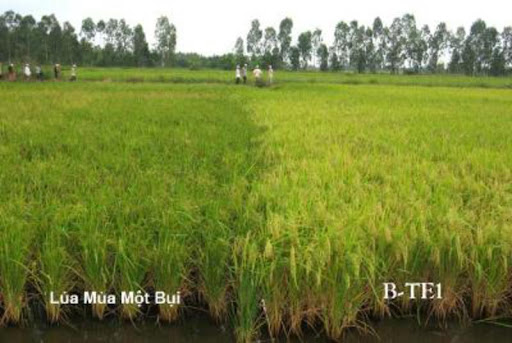 KORAPUT: Shortage of land has hit rice-research hard at the Regional Research and Technology Transfer Sub-Station (RRTTS) at Jeypore.
Officials said RRTTS, which is run by the OUAT, Bhubaneswar, had 27 acres of land to carry out rice research. However, this has drastically come down due to illegal encroachments and government projects.
In late 80s at least three acres of land of the RRTTS was used for the main canal of the Kolab dam. Now, five acres of land is going be absorbed by the Centre sponsored Ranchi-Vijayawada corridor which will pass through the sub-station. Moreover, in the absence of any boundary wall, a few acres of the sub-station has been illegally encroached.
According to the junior breeder of RRTTS Parshuram Sial, as the dry up-land of the sub-station will be used for the road project, the aerobic rich research work of the sub-station will be adversely affected.
"We asked the concerned officials to provide us with five acres of land in some other place near the sub-station but to no avail. The sub-station also needs a boundary wall to stop encroachments by private parties," he added.
The centre was established 1936 by the then King of Jeypore to preserve the indigenous varieties of paddy of the area. Later, it came under the state agriculture department and in 1968 it was transferred to the OUAT. Till date, at least 170 varieties of locally produced paddy, including 40 scented types, have been preserved by the centre. Manaswani and Prathika varieties of paddy developed by the centre in 2008 yield around 35 quintals of paddy from an acre of land which is much higher than most other varieties.
"The RRTTS has been instrumental in preserving several home-grown paddy-varieties of the area and supplying seeds to the farmers. All efforts should be made to ensure that the research work of the centre is not hit by scarcity of land," said a Koraput based tribal researcher, Paresh Rath.
(Source: http://timesofindia.indiatimes.com/city/bhubaneswar/Rice-research-centre-loses-land-to-govt-projects/articleshow/7470854.cms)
Pakistan’s Rice Shipments May Fall 11% After Floods, Group Says
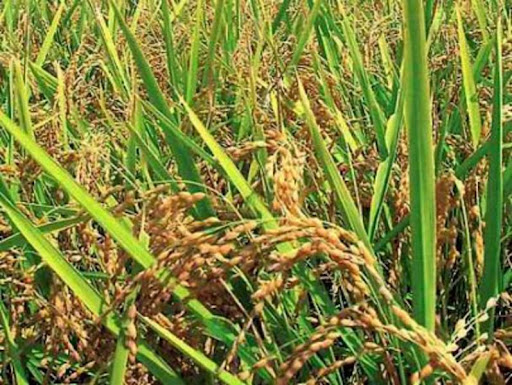 Pakistan, the world’s third-largest rice exporter, may ship 11 percent less of the grain this year after floods destroyed standing crop, a traders’ group said.
“We may export as much as 4 million tons in the year ending June 30 because the floods washed away 700,000 tons of the crop,” Irfan Ahmed Sheikh, chairman of the Rice Exporters Association of Pakistan, said in an interview by phone from Karachi today. Pakistan’s rice exporters sold 4.5 million tons worth $2.2 billion in the year ended June 30, 2010 Sheikh said.
Pakistan’s deadliest floods last summer destroyed $3.3 billion worth of crops, according to the farm ministry. Pakistan has shipped $1 billion worth of rice in the seven months ended Jan. 31, the association said in a statement earlier this week.
The group had estimated in December it would export 4.6 million tons.
India's wheat production to be at record high of 81.47MT for 2010-11 crop year news
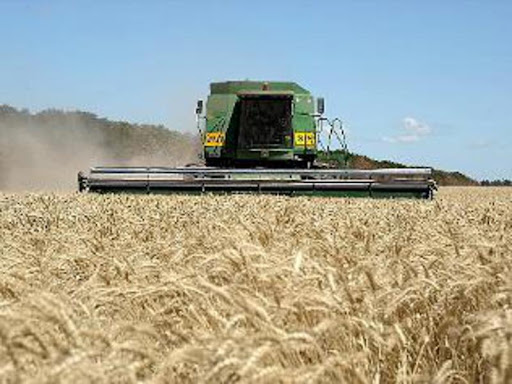 On record production of wheat and pulses, India's foodgrain output overall in the 2010-11 crop year is expected to be right on track following a drought year with a growth of 6 per cent at 232.07 MT.
"We are likely to achieve record production of wheat (81.47 MT), pulses (16.51MT) and cotton (33.9 million bales of 170 kg each) this year," agriculture minister Sharad Pawar told reporters after announcing the second advance estimate of foodgrain production for 2010-11 crop year.
According to Pawar, foodgrain production was likely to to be up at 232.07 MT against 218.11 MT last year. The output therefore would be marginally below the record production of 234.47 MT in 2008-09.
According to US think-tank International Food Policy Research Institute, (IFPRI)'s Asia director Ashok Gulati, there was no inflation in wheat and rice.
He added pulses production was up and this year and the population would not have to bear the brunt of high prices it faced in 2009. He added that some relief was on the way in the coming days.
Noting that the higher production would be achieved under adverse conditions of significant crop damage due to drought in Bihar, Jharkhand, Orissa and West Bengal as also the effects of cyclone, unseasonal rains and severe cold wave and frost condition in several parts of the country, Pawar said the desire was to reach 4 per cent growth but there was drought last year.
(Source: http://www.domain-b.com/economy/agriculture/20110210_production.html)
Philippines lowers rice import target
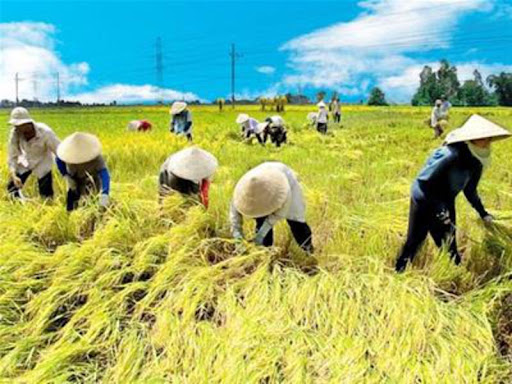 The Philippine government will be buying less than one million metric tons of rice for 2011, with initial purchases to be made within the first quarter, Agriculture Secretary Proceso Alcala said on Wednesday.
“What is recommended is about 1.3 million metric tons. But we’re confident we will not fill that volume,” Alcala told reporters.
Field reports indicate that “we might have robust harvest after all,” Alcala said.
The government maintains that the rice output target of 17.4 million MT target for 2011 is possible since the La Nina phenomenon will not reduce production and that measures had been put in place since last year to expand the area planted to rice. Last year, rice production contracted by 3.04 percent to 15.77 million MT due to El Nino.
While the government was urging the private sector to bring in the grains import need with assistance from the National Food Authority, it is not discounting the possibility of getting into government-to-government deal.
“We’re are also assessing the situation. We have a memorandum of agreement with Vietnam but we are beholden on that MOA. We may or may not source rice from Vietnam. We still have that option,” said Alcala.
He the initial volume will be decided within the next two weeks.
The government has already allocated 163,000 MT rice for importation by the private sector under the country specific quota, a commitment to the World Trade Organization.
The concession allows that Philippine government to curb rice importation to protect local farmers, but it has to import from four countries only, specifically Thailand, India, Australia and China.
The volume forms part of the recommended rice importation for the year. The government will also recommend to add to the total volume the arrival of some 56,000 MT rice from Vietnam which was held for safekeeping in Vietnam for lack of government storage facility.
All government warehouses remain full to the brim with as much as 1.7 million MT rice in its possession.
Total rice inventory as of the January 31 was about 3.39 million metric tons. The bulk remains with the government while as much as 1.13 million MT are with the households. The commercial sector has in its possession about 563 million MT.
Wheat surges on domestic demand
 Wheat futures traded positive on Wednesday due to emergence of fresh buying on the futures platform. The movement was restricted to a very narrow range as the spot market activities were sluggish across the major markets. The absence of the buyers kept the spot prices steady.
U.S. wheat futures rallied to their highest point in nearly 30 months on global supply concerns. CBOT March wheat ended 11 3/4 cents or 2.4% higher at $8.86 a bushel.
Wheat futures further strengthened due to demand potential from North Africa and Middle East countries. UN reports of the potential crisis in china due to drought in the wheat growing areas supported the CBOT wheat futures to rally.
The increase in the prices and open interest while volume is decreasing indicates that the prices be subjected to correction which might be good buy point for the uptrend. The basis of the wheat prices is recovering which is expected to continue for the day.
Outlook
The wheat futures are anticipated to continue the positive trend for the day. Fresh buying might continue for the day that might keep the market positive for the day. Currently the CBOT prices are trading negative by 0.2%.
Fundamentals
The demand and the arrivals across the spot markets are much prominent. The acreage under wheat has increased by 9 lakh ha in the current rabi season. According to second advance estimates the production of wheat is estimated at 81.47 million tons compared to 80.80 million tons last year.
(Source: http://www.commodityonline.com/futures-trading/technical/Wheat-surges-on-domestic-demand-21831.html)
Wednesday, February 9, 2011
Bulog told to buy 3.5m tons of rice from farmers
 The government wants the State Logistics Agency (Bulog) to buy millions of tons of rice from farmers to secure a steady supply of the staple food and curb further price increases.
Coordinating Minister for the Economy Hatta Rajasa said that Bulog, which maintains the government’s rice reserve, would need to procure at least 3.5 million tons of rice during the February and April harvests to maintain a ready reserve of 1.5 million tons.
“We ask Bulog to be proactive in the market to absorb [farmers’] rice production to meet the people’s demands if necessary,” he told reporters after a meeting at his office in Jakarta.
Bulog was also expected to up its rice stock gradually to 2 million tons in the future “to be safe”, Hatta said, since elsewhere in the world nations were also “maximizing their food stocks”.
“We’re gradually heading in that direction [2 million ton annual rice stock]. I will see that rice procurement is realized this year, so Bulog must continually absorb farmers’ rice,” Hatta said.
Climate anomalies have resulted in crop failures in Indonesia, a domestic consumption-reliant country where rice is considered the main staple food.
Indonesia imported 1.23 million tons of rice in 2010 from Thailand and Vietnam to ensure a sufficient stock and maintain price stability.
Rice imports would stop after the harvest season began in March because, since according to the government’s calculations “there will be rice shortage from January to February, when our stocks are too low” Hatta said.
The government has vowed to go “all out” in securing the supplies of the staple food in the country, including by providing fertilizer and seeds to farmers, as well as by giving Bulog more flexibility in the procurement of unhusked rice from farmers.
“The presidential decree for those [two measures] will be launched soon. I have finished the material in January,” Hatta said.
The government will also provide 1,000 dryers in rice production centers across the country if heavy rainfall damages the quality of the rice production.
The decline in the rice supply has resulted in an increase in prices during the last two months. The price of standard quality rice reached about Rp 7,400 a kilogram in January, up from about Rp 6,400 in the same month last year.
Overall food prices surged 18.25 percent in January, bringing inflation to a 21-month high of 7.02 percent last month.
Rice and chili contributed the most to the increase, accounting for 0.22 percent of the overall headline inflation rate.
However, Central Statistics Agency (BPS) chair Rusman Heriawan said there was a slide in rice and chili prices in the first two weeks of February due to the upcoming harvest season, while an upward trend was seen in soybean prices.
“Soybean price hike will affect tofu and tempeh prices,” Rusman said after the meeting, adding that, overall, inflation would ease this month as expectations of heavy production would rise due to the upcoming harvest.
Deputy Agriculture Minister Bayu Krisnamurthi said the price hike was due to soaring international soybean prices, and, according to him, soybean production would likely not meet targets in 2011.
(Source: http://www.thejakartapost.com/news/2011/02/10/bulog-told-buy-35m-tons-rice-farmers.html)


